
Car seat back pain
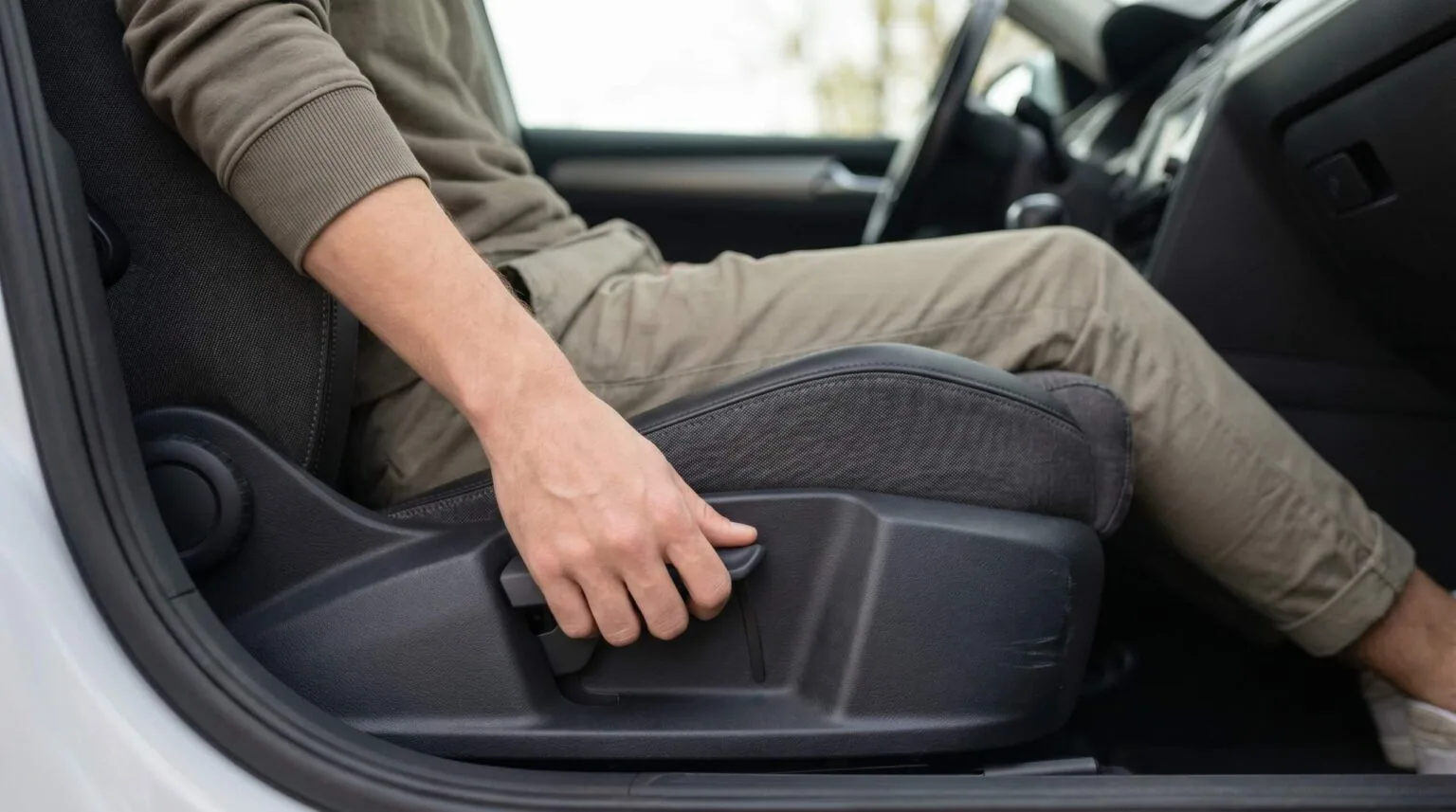
How Your Car Seat Is Collapsing Your Discs
If you’re driving to work in Chicago or the surrounding areas every day, you’re spending a significant portion of your life in a seat that was never designed with your spine’s health in mind. Most car seats prioritize comfort and aesthetics over spinal support, leaving your lower back vulnerable to compression and strain. After just a few months of regular commuting, many drivers develop chronic lower car seat back pain or hip pain—not from a single injury, but from the cumulative effect of poor seating posture and inadequate lumbar support.
The problem is biomechanical. When you sit in a typical car seat without proper lumbar support, your spine flattens. Your pelvis tilts backward, your lower back rounds, and your discs—the gel-filled cushions between your vertebrae—begin to compress and shift. Over hours and weeks, this compression can lead to bulging discs, nerve irritation, and the kind of persistent back pain that makes your commute miserable and your workday unproductive.
Disc Compression Happens During Your Drive
Your intervertebral discs are designed to distribute load evenly across your spine when you maintain neutral alignment. But car seats naturally encourage a slouched, reclined posture that places uneven pressure on the back half of your discs. Every pothole, every red light where you shift your weight, every hour spent gripping the steering wheel compounds this stress.
The longer you sit without moving, the worse it gets. Sitting reduces blood flow to your discs and the muscles supporting your spine. Your core muscles disengage, leaving your discs to bear load they weren’t meant to carry alone. If you’re commuting 45 minutes to an hour each way, that’s 1.5 to 2 hours of daily compression—enough to cause real, measurable damage over time.
The good news is that proper seat adjustment costs nothing and takes just a few minutes. Start by positioning your seat so your hips are slightly higher than your knees—this tilts your pelvis forward and restores the natural curve of your lower spine. Your back should contact the seat; if there’s a gap between your lower back and the seatback, you need more support.
The steering wheel should be positioned so your elbows bend at roughly 90 degrees. Your shoulders should be relaxed, not hunched forward. Avoid reclining more than 20 degrees; the more reclined you go, the more your spine flattens and the harder your discs work.
The Lumbar Roll: Your Secret Weapon
A small lumbar support roll—a cylindrical cushion placed behind your lower back—can be transformative for car seat back pain. It maintains the natural inward curve of your lumbar spine, reducing disc compression and keeping your pelvis in neutral alignment. You can purchase an ergonomic lumbar roll or even use a rolled towel. Position it at the level of your belt line, and adjust it so it feels supportive without being uncomfortable. This single addition can reduce back pain significantly for commuters.
Movement
No seat adjustment will fully protect your discs if you sit motionless for hours. Every 30 to 45 minutes, take a short break. Get out of the car, stand, and gently move your spine—a few cat-cow stretches or a short walk. Even moving slightly in your seat—shifting weight, adjusting posture—helps. Movement pumps fluid back into your discs and activates the muscles that support your spine.
Proper ergonomics and movement help, but commuters often benefit from chiropractic care as preventive maintenance. Regular adjustments help restore proper spinal alignment, reduce muscle tension, and ensure your discs stay healthy. Rather than waiting until pain forces you to seek care, proactive chiropractic visits catch alignment issues early and keep your spine resilient against the daily compression of your commute.
If you’re a Homewood-area commuter experiencing lower back or hip pain, it’s time to address the root cause. A few adjustments to your driving habits combined with professional support from Dr. Barton can transform your commute from a source of pain into a manageable part of your day.
Call 708-922-1400 or visit our contact page.