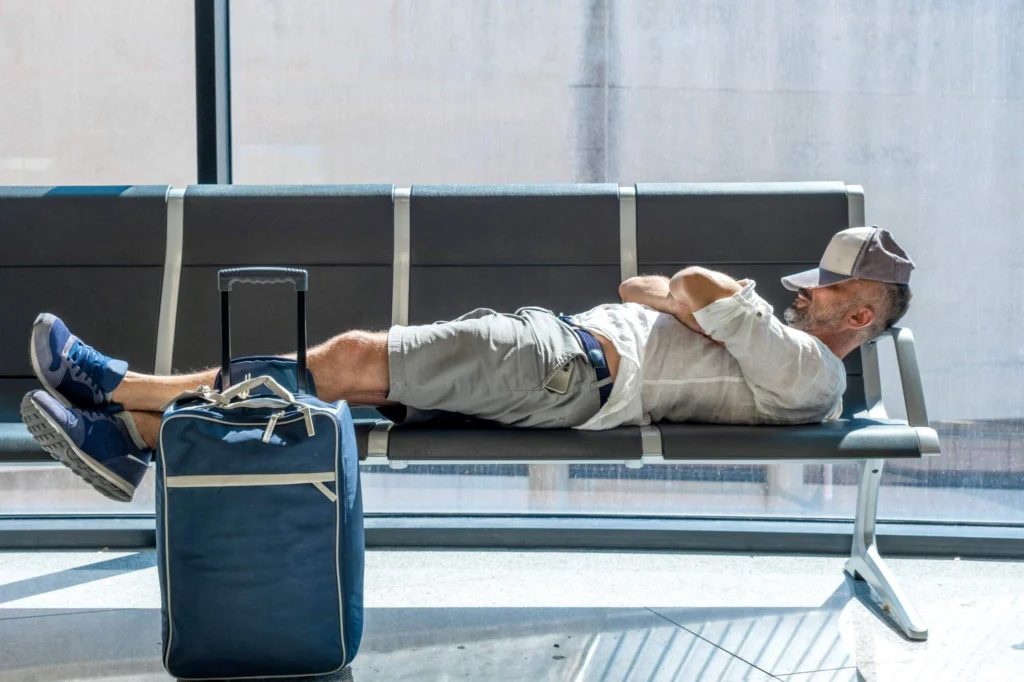
How Holiday Travel Disrupts Your Spine
Holiday travel is exciting—but crossing time zones takes a real toll on your body. When you fly across multiple time zones, your circadian rhythm (your body’s internal clock) falls out of sync with your new location. That disruption ripples through your nervous system, affecting sleep quality, pain sensitivity, and posture in ways that can strain your spine for days after you land.
Understanding this connection helps you protect your spinal health during the busy travel season and recover faster once you’re home.
Circadian Disruption and Spinal Pain
Your circadian rhythm regulates far more than sleep and wakefulness. It controls your cortisol levels, inflammation, muscle tension, and how your nervous system processes pain signals. When jet lag throws this rhythm off, your body enters a state of stress. Muscles tighten, inflammation rises, and your pain threshold drops—meaning discomfort that wouldn’t normally bother you suddenly feels sharp.
Add in hours sitting in an airplane seat (hunched over a phone or pillow), and your cervical and lumbar spine are under real strain. Jet lag amplifies that strain by keeping your muscles rigid and your nervous system in a heightened state of alert.
Sleep Quality Matters for Spinal Recovery
During deep sleep, your spine undergoes active repair. Intervertebral discs rehydrate, muscles relax fully, and inflammatory markers drop. Jet lag sabotages this process by fragmenting your sleep—you might sleep at odd hours, wake frequently, or never reach the restorative deep stages your body needs.
Poor sleep also impairs your proprioception (your body’s awareness of itself in space), making you more likely to adopt poor posture without realizing it. Combined with airplane seating and unfamiliar beds at your destination, this is a recipe for post-holiday back and neck pain.
Practical Tips to Protect Your Spine While Traveling
Adjust your light exposure strategically. Light is the most powerful circadian regulator your body has. If you’re flying east (arriving earlier in the day), seek bright light in the morning at your destination to advance your internal clock. If you’re flying west (arriving later), get light exposure in the evening. This nudges your circadian rhythm toward the new time zone faster, reducing overall jet lag severity and helping your sleep normalize sooner.
Stay hydrated throughout your flight. Airplane cabins are extremely dry, and dehydration thickens spinal fluid, reduces disc cushioning, and increases pain sensitivity. Drink water consistently—aim for 8 ounces every hour during flight—and avoid excess alcohol and caffeine, both of which worsen dehydration and sleep disruption.
Move gently and frequently. Sitting still for hours lets muscles stiffen and blood pool. Stand and walk every 1–2 hours during long flights. At your destination, resist the urge to collapse in bed immediately upon arrival, even if you’re exhausted. Instead, take a 15–20 minute walk outside (bonus: you’ll get light exposure and gentle spinal movement). This eases muscle tension and signals your nervous system that it’s time to adjust.
Optimize your sleep environment. At your destination, make your sleeping space as dark, cool, and quiet as possible. If your hotel bed feels too soft or firm, ask for extra pillows or a mattress topper to support your spine’s natural curves. Poor sleep posture during jet lag recovery is a leading cause of holiday travel injuries.
Be mindful of your posture during and after travel. When you’re tired from jet lag, posture collapses—your shoulders round, your head juts forward, and your lower back slumps. This exaggerates stress on your cervical and lumbar spine. Set phone reminders to check your posture every 30 minutes while traveling and for the first few days after arrival.
When to Seek Professional Support
If holiday travel leaves you with lingering neck stiffness, lower back pain, or headaches that don’t resolve within a week, spinal misalignments may have developed during your journey. A chiropractic adjustment can realign your spine, ease nerve tension, and speed your recovery—allowing you to enjoy the rest of your holiday without pain.
Smart travel habits minimize jet lag’s impact on your body, but sometimes professional care is the fastest path back to feeling your best. If post-travel pain strikes call Dr. Diane Barton at 708-922-1400 or visit our contact page.