
Archive for February 2026
Prolonged Rest Can Make Pain Worse

Here’s Why
“I’ve been trying not to move it.”
That’s something we hear often from patients dealing with neck or back pain. They avoid turning their head. They sit carefully. They limit bending and twisting because movement feels like it might make things worse.
It seems logical. If something hurts, protect it. But in many cases, prolonged rest can actually prolong the problem.
The body is built for motion. Muscles, joints, discs, and nerves all depend on regular movement to stay healthy. When activity decreases, muscles tighten and weaken. Joints become stiff. Circulation slows. The nervous system can become more sensitive, interpreting normal movement as a threat instead of something safe.
Spinal discs rely especially on motion. They do not have a strong direct blood supply. Instead, they receive nutrients through changes in pressure that occur when you move. When movement is limited for too long, that natural exchange decreases. Stiffness increases, and recovery can take longer.
This doesn’t mean ignoring sharp pain or pushing through a significant injury. Short-term rest after an acute flare-up can be appropriate. But extended inactivity often creates secondary issues — reduced mobility, muscle imbalance, and decreased stability. Over time, the body becomes less resilient.
Pain may improve temporarily with rest, but the underlying mechanical stress often remains.
True recovery focuses on restoring healthy movement patterns. That includes improving joint mobility, reducing nerve irritation, and strengthening the muscles that support the spine. When movement improves, circulation improves. When circulation improves, tissues heal more efficiently.
Dr. Barton addresses the mechanical factors contributing to restricted motion. By improving joint function and supporting better biomechanics, the body is better able to move without irritation.
Rest has its place. But movement is often the missing piece.
If your neck or back pain has lingered despite “taking it easy,” it may be time to focus on restoring function rather than continuing to avoid activity.
Pain doesn’t always mean stop. Often, it means move better.
Click here to contact Barton Chiropractic Clinic or call 708-922-1400
Disc Injuries Don’t Happen Overnight

“I just bent over and my back went out.”
We hear this all the time. The pain feels sudden and intense, so it must have just happened, right? Not usually. Most disc injuries develop gradually over time. That final bend or twist is often just the tipping point — not the true cause.
Your spinal discs are designed to absorb shock and support movement. They’re strong and resilient. But like any structure under repeated stress, they can weaken when small strain adds up over months or years. Prolonged sitting, poor posture, repetitive bending or twisting, old injuries that never fully healed, and weak core stability can all contribute. Individually, these stressors may not cause pain. Collectively, they can create small changes in the disc’s outer fibers that reduce its ability to handle load.
Then one day, you reach for something simple — and pain appears. The movement didn’t create the problem. It exposed it.
If disc injuries develop slowly, recovery must address more than just symptoms. Masking pain without correcting spinal alignment, joint motion, or muscle imbalance allows the underlying stress to continue. True healing focuses on restoring proper movement patterns and reducing ongoing strain on the disc.
Dr. Barton helps improve joint mobility, decrease nerve irritation, and support healthier biomechanics. When combined with corrective exercises and postural awareness, it reduces the mechanical stress that contributes to disc injuries in the first place.
Disc injuries are rarely random. They are usually the result of patterns, and patterns can change. Improving posture, strengthening supportive muscles, and maintaining healthy spinal motion can significantly reduce your risk of future problems. Pain may feel sudden, but disc injuries rarely are. If your back or neck pain seemed to come out of nowhere, it may be time to address the cause — not just the symptom.
Click here to contact Barton Chiropractic Clinic or call 708-922-1400
Neck pain often?
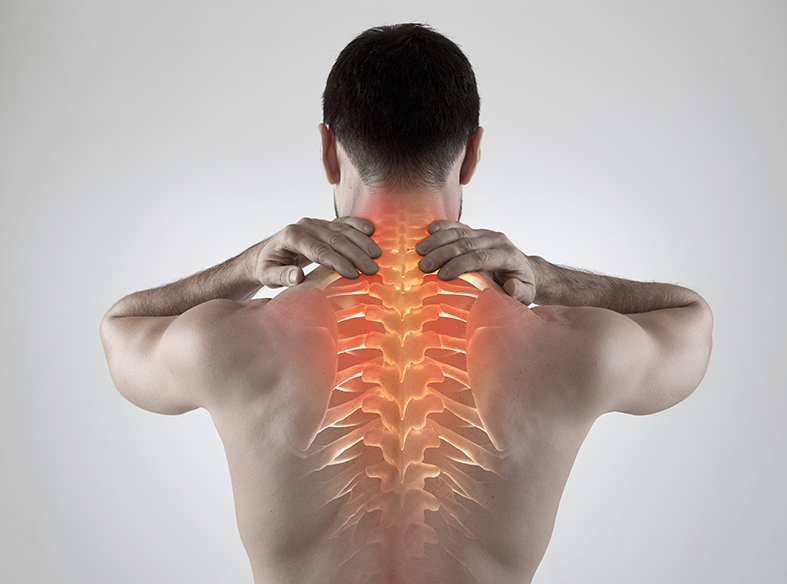
Why Your Neck Pain Isn’t Coming From Your Neck
Neck pain is one of the top reasons people seek chiropractic care. But the real problem often does not start in the neck. You may feel pain at the base of your skull or between your shoulders. However, the true source often comes from poor spinal movement, posture imbalances, or nervous system stress.
Your body works as one connected system. When one area loses mobility or stays under constant strain, other regions compensate. Restricted movement in the upper back or mid-spine often forces the neck to work harder than it should. Over time, this overload creates muscle tension, joint irritation, and pain that feels local but isn’t.
That’s why treatments that only target the neck—like massage, stretching, or heat—often provide short-term relief but fail to fix the root cause.
Modern life constantly stresses the spine. Long hours at a desk, phone use, laptop work, and daily tension all affect posture. Forward head posture and rounded shoulders shift pressure directly into the neck. Even without an injury, the neck absorbs extra strain.
As these patterns continue, your nervous system reinforces them. Tension becomes normal. Pain follows.
Dr. Barton does not chase symptoms. She evaluates the entire spine to find where movement breaks down. By restoring motion in the upper back and improving alignment, chiropractic adjustments reduce the stress placed on the neck. When the spine moves properly, the neck no longer has to compensate.
Why a Whole-Body Approach Matters
If you only treat where it hurts, the pain often returns. Lasting results come from improving overall spinal function, posture, and movement patterns.
If your neck pain keeps coming back, the source may not be your neck at all. Dr. Barton identifies the deeper patterns driving your discomfort and corrects them at their origin. The result is better movement, less tension, and longer-term relief.
Click here to contact Barton Chiropractic Clinic or call 708-922-1400
Daily Stress & Posture

Your posture is more than a reflection of how you sit or stand—it’s a physical expression of how your body is responding to daily stress. Long hours at a desk, constant phone use, emotional pressure, and mental overload all leave subtle (and sometimes not-so-subtle) marks on the body. Over time, these patterns can affect how you move, breathe, and feel.
When the body is under chronic stress, the nervous system often shifts into a protective state. Shoulders may round forward, the head drifts ahead of the body, and the upper back stiffens. These postural changes aren’t signs of laziness or weakness—they’re adaptive responses. The body is doing its best to cope with repeated demands, tension, and fatigue.
Forward head posture, for example, is commonly associated with prolonged screen time and mental focus. This position places added strain on the neck, upper back, and shoulders, often contributing to headaches, stiffness, and muscle tension. Similarly, a rigid or collapsed posture can restrict breathing, limiting the body’s ability to shift out of a stress response and into a more relaxed state.
What’s important to understand is that posture and stress influence each other. Daily stress can create postural changes, and those changes can, in turn, reinforce stress signals in the nervous system. This feedback loop is one reason why rest alone doesn’t always resolve physical discomfort. Even when stress levels feel lower mentally, the body may still be holding onto old patterns.
Dr. Barton looks at posture not as something to “fix,” but as information. By evaluating spinal alignment, joint motion, and muscular balance, chiropractors can identify areas where the body is compensating or under strain. Gentle adjustments help restore movement and reduce tension, giving the nervous system clearer input and more capacity to adapt.
Over time, improved alignment can support better posture, easier breathing, and a greater sense of physical ease. Many people notice that as their posture improves, they also feel more grounded, focused, and resilient in daily life.
Your posture tells a story about how you’re navigating your world. Paying attention to it—and supporting it through chiropractic care—can be a meaningful step toward managing stress and improving overall well-being.
Click here to contact Barton Chiropractic Clinic or call 708-922-1400