
Archive for January 2026
Tight Muscles

Why Stretching Isn’t Fixing Your Tight Muscles
If you’re stretching regularly but still feel tight, sore, or restricted, you’re not alone. Many people assume tight muscles mean they need more stretching. But in many cases, stretching isn’t fixing the real problem—and sometimes it’s not the solution at all.
Muscles often feel tight not because they’re shortened, but because they’re protective. When the nervous system senses instability, joint restriction, or poor communication between the brain and body, it increases muscle tension to create support. This is the body’s way of keeping you safe.
Stretching a muscle that’s tight due to protection may provide temporary relief, but the tension usually returns—sometimes even stronger—because the underlying issue hasn’t been addressed.
Your muscles are controlled by your nervous system. When joints in the spine or extremities aren’t moving properly, nerve signals can become distorted. The brain may interpret this as a threat and respond by tightening surrounding muscles.
That’s why stretching alone often feels like a short-term fix. You’re working on the symptom (muscle tension), not the cause (joint restriction and nervous system imbalance).
Stretching Can Sometimes Make Things Worse
Overstretching muscles that are already overworked or compensating can lead to irritation, inflammation, or even injury. This is especially common in areas like the neck, low back, hips, and hamstrings.
If your body is using muscle tension to stabilize a problem area, forcing that muscle to relax without correcting the source can leave you feeling unstable or sore.
Dr. Barton focuses on restoring proper joint motion and improving nervous system function. When spinal or joint restrictions are corrected, the brain no longer needs to hold muscles in a protective state. As communication improves, muscles can naturally relax, balance returns, and movement becomes easier—often without aggressive stretching.
Stretching has its place, but it’s not always the answer to tight muscles. If tension keeps coming back, it may be your body signaling a deeper issue.
By addressing how your spine, joints, and nervous system work together, chiropractic care helps your body release tension from the inside out—leading to longer-lasting relief and better overall function.
Click here to contact Barton Chiropractic Clinic or call 708-922-1400
Sitting Too Much
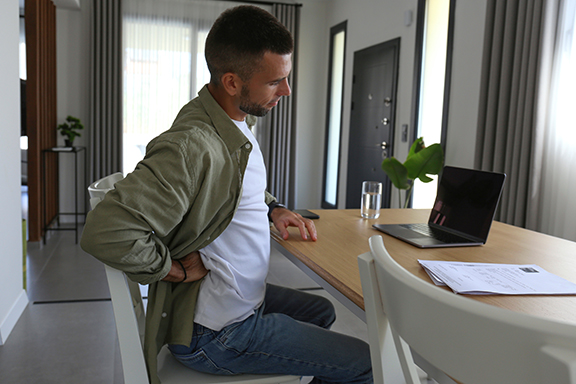
Most people don’t think of sitting as a health risk. It feels harmless, comfortable, and productive. Yet the human body was never designed to sit for long periods of time. When sitting becomes the default position—at work, in the car, and at home—it quietly changes how the body functions.
One of the first things affected by sitting too much is posture. As you sit, especially while looking at a screen, the head shifts forward and the shoulders round. This places added stress on the neck, upper back, and shoulders. Over time, muscles become imbalanced—some tighten while others weaken—making good posture harder to maintain even when standing.
Sitting also places constant pressure on the lower spine. The natural curves of the spine flatten, and the discs between the vertebrae experience uneven stress. This can lead to stiffness, discomfort, and eventually chronic lower back pain. Many people are surprised to learn that sitting can put more strain on the spine than standing or walking.
Reduced movement is another major issue. Joints rely on motion to stay healthy. When movement is limited, joints become stiff and less mobile. Muscles that aren’t used regularly begin to weaken, especially the core and glute muscles that support the spine. As these muscles weaken, the body compensates, often leading to pain in the hips, knees, and lower back.
Sitting too much can also affect circulation and the nervous system. Limited movement slows blood flow, which contributes to fatigue and stiffness. The nervous system depends on proper spinal alignment and motion to function efficiently. When the spine is under constant stress, communication between the brain and body may be less effective.
Dr. Barton can help counteract the effects of prolonged sitting by restoring spinal alignment, improving joint mobility, and reducing tension caused by poor posture. Many people notice improved flexibility, reduced discomfort, and better overall function with regular chiropractic care.
While sitting may be unavoidable, its effects don’t have to be permanent. Standing regularly, stretching, changing positions, and supporting spinal health through chiropractic care can help your body function the way it was designed to—balanced, resilient, and adaptable.
Click here to contact Barton Chiropractic Clinic or call 708-922-1400
Micro-Stress

Most people think stress shows up as pain, injury, or burnout. But long before that happens, the body experiences micro-stress—small, repeated physical tensions that quietly accumulate over time.
Micro-stress doesn’t usually announce itself. You may not wake up in pain or feel “injured.” Instead, your body feels tighter, less flexible, or slower to recover. Energy drops. Movements feel restricted. You feel stiff after sitting, standing, or sleeping, even though nothing dramatic happened.
These small physical tensions come from everyday life. Hours at a desk. Repetitive movements. Holding your phone in the same position. Driving. Emotional stress that never fully resolves. Individually, none of these seem significant. Together, they place constant low-level demand on your muscles, joints, and nervous system.
Your body adapts to this stress by compensating. Muscles stay slightly contracted. Joints move less freely. The nervous system remains on alert. Over time, these adaptations become your new “normal.” This is why many people say, “I thought this was just how my body was now.”
The challenge with micro-stress is that it doesn’t always cause immediate pain. Instead, it reduces resilience. When the body loses adaptability, even minor stressors—an awkward movement, poor sleep, or a busy week—can feel overwhelming. This is often when discomfort finally shows up, even though the real issue has been building for months or years.
Chiropractic care looks at how these small physical tensions affect the spine and nervous system over time. Rather than waiting for symptoms to escalate, chiropractic adjustments help restore motion, reduce unnecessary tension, and support the body’s ability to adapt. When movement improves and the nervous system functions more efficiently, the body handles daily stress with less effort.
Addressing micro-stress early can make a meaningful difference. People often notice they move more freely, recover faster, and feel more comfortable in their bodies overall. It’s not about fixing one problem—it’s about preventing many small stresses from becoming a bigger one.
If your body feels tighter, less responsive, or slower to bounce back, micro-stress may be playing a role. Paying attention to these subtle signals can help you stay ahead of discomfort and support long-term physical well-being.
Click here to contact Barton Chiropractic Clinic or call 708-922-1400
Feeling Off Physically

Many people are walking around right now feeling off physically—not injured, not sick, not dealing with obvious pain—yet not truly well either. Sleep feels lighter. Stress feels heavier. Muscles feel tight for no clear reason. Energy comes and goes. You may struggle to explain it, but you know something doesn’t feel quite right.
This experience is more common than most people realize. “Feeling off” often has less to do with a single diagnosis and more to do with how the body adapts to ongoing stress.
Stress doesn’t always show up as anxiety or overwhelm. Very often, it shows up in the body first. Long hours of sitting, constant screen use, emotional pressure, disrupted routines, and limited recovery all place demands on the nervous system. Over time, the body shifts into a protective state. Muscles stay tense. Breathing becomes shallow. Movement feels restricted. The body stays alert even when it no longer needs to be.
When this becomes the baseline, people may feel disconnected from their body, less resilient, or simply not themselves. They may describe it as feeling off physically without being able to point to one specific problem. Nothing is technically “wrong,” but the body isn’t functioning at its best.
This is where chiropractic care can support the bigger picture. Rather than focusing only on symptoms, we look at how well the spine and nervous system are communicating. Restrictions in spinal movement can interfere with the nervous system’s ability to regulate stress and adapt to daily demands. When those restrictions are addressed, the body often responds with greater ease and balance.
Many people notice changes they didn’t expect: deeper breathing, improved sleep, clearer focus, or a general sense of calm. These subtle shifts matter. They are signs that the nervous system is moving out of constant protection and back toward regulation.
Feeling well isn’t just about the absence of pain. It’s about how adaptable, present, and connected you feel in your body. If you’ve been telling yourself that you’re “fine” while quietly feeling off physically, it may be worth listening to that signal.
Sometimes the body doesn’t need fixing.
It needs support.
Click here to contact Barton Chiropractic Clinic or call 708-922-1400